
Dear Feminists

I’ve been cruising feminist Substack in light of the recent censorship attempt on Substack to make this a safer space. I can see how easy it is for women (and some men) who are upset about the revelations in the Epstein files of the names of revered men to become influenced toward radicalisation by posts that paint women as collective victims of men they’ve never encountered.
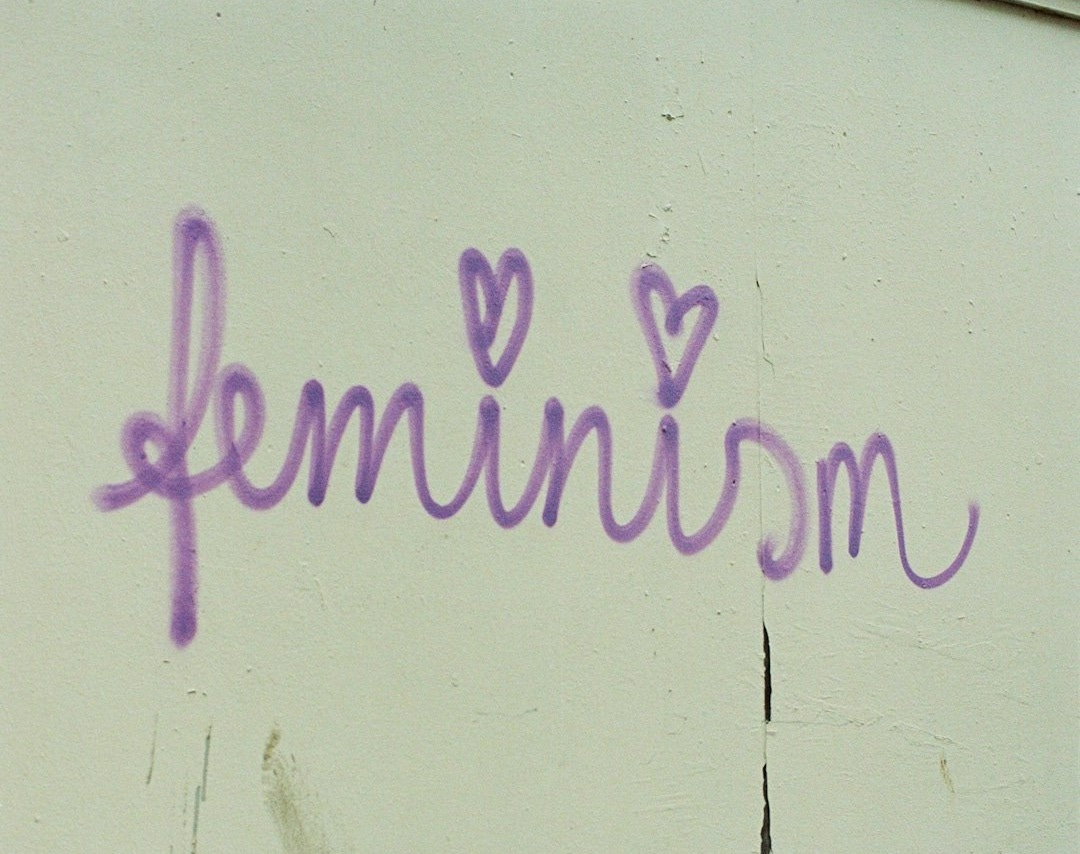
I love analysing language and identifying the mental models presented in posts and comment threads that affirm a dominant belief that men are dangerous. I’m not discounting the pushback, as there is some, but it’s a minority.
Here are the dominant mental models present:
– Men are inherently dangerous.
– Misogyny is foundational to men.
– Male genius is built on harm.
– If a man appears safe, he probably isn’t.
– Men’s sexual pathology is widespread.
– Men are wired to conquer.
– Men require correction and oversight.
– Women are morally or spiritually superior.
– Male status equals unearned power.
– Male dissent equals complicity.
– Safety requires distrust.
Negative biases about men include: predatory, entitled, emotionally stunted, collectively responsible.
Positive biases about women include: wiser, more ethical, more life-giving, less dangerous, closer to nature, spiritually aligned.
This is where the conversation about harm and abuse requires discipline, not escalation.
Feminist discourse frequently invokes shadow work, integration, parts work, and the necessity of confronting disowned and rejected aspects of the self. Yet the tone of many of these threads suggests something closer to collective projection. Traits condemned in men are increasingly treated as if they belong exclusively to men, with corruption, abuse of power, and sexual exploitation framed as inherently male while moral clarity and ethical grounding are innate to women.
I want to say here that none of this minimises the reality of abuse. Rape threats, deepfake pornography, racialised harassment, and sexual coercion are degrading and inexcusable. When men engage in this behaviour and experience no meaningful consequences, it tells observers that status can insulate misconduct and that proclaimed social values against abuse are selectively enforced. This hypocrisy corrodes trust and understandably destabilises people who believed those values were real and that institutional accountability is naturally enforced.
The capacity for harm is not sex-specific. There are plenty of examples of women colluding with abusive men and exercising coercive power. Women can betray, manipulate, and rationalise their own misconduct. Denial of these traits in women, or calling them internalised misogyny or patriarchy, excuses wrongful use of agency while simultaneously implying women lack agency to behave morally, often because of systemic -isms.
It’s appropriate and necessary to examine behaviour — anyone’s behaviour without generalising pathology to an entire sex while idealising the other. When critique shifts from behaviour to identity, it ceases to be analytic and becomes ideological.
Those unfamiliar with my work sometimes assume that because I write and speak about narcissism, I diagnose and label people. My work is about interpersonal narcissism and recognising that each of us has narcissistic traits that influence behaviour. I can use narcissism as an adjective to shortcut an understanding about a constellation of self-preserving, controlling, and hostile behaviours among groups rather than a noun that labels an individual or group with a pathology. It’s more precise to describe individuals and groups with poor character, emotional, and moral development based on predictable patterns of language and behaviour than to simply refer to them as narcissists.
I also want to highlight an internal contradiction here. Patriarchy is criticised for externalising responsibility and consolidating power while feminism, at its best, claims to promote agency and self-awareness. Yet when harm is reframed as intrinsic to men and virtue as intrinsic to women, responsibility is externalised. Vice exists entirely outside the self and virtue is presumed within it.
In my work on discernment, I describe how destabilisation can induce a rush toward grasping certainty. When trust is broken by a public figure or an institution, the individual looks for coherence and relief from ambiguity. One way to achieve that relief is by enlarging the category of threat. If certain powerful men betrayed their values, it can be stabilising to conclude that all men as a group are unsafe. When institutions protect these men, the psyche’s logic is to decide that the system itself is irredeemable. While it may or may not be true, that step can restore a sense of order by simplifying the situation’s complexity.
Discernment demands that we tolerate the discomfort of not having a totalising explanation and resist the urge to replace one authority with another because the new authority appears morally safer or ideologically aligned. This is the same mechanism that drives people to join one cult after the other without purging the parent stand-in, whether that authority is ideological or paternal.

No one can truly hold another person accountable in the way public discourse and social justice activism rhetoric often implies, because integrity isn’t imposed from the outside. People who want to remain incorruptible hold themselves to account. Those whose morals deteriorate under status and influence rarely do so in isolation, since their rise is typically accompanied by elevation, financing, admiration, and insulation from networks of followers, investors, institutions, and media ecosystems that benefit from their charisma and proximity to power. Corruption therefore tends to emerge as a relational and cultural dynamic whereby many participants enable what later appears to be the fault of one individual.
Power, status, wealth, and recognition exert a predictable pull on anyone whose self-worth depends on external validation. Assuming immunity under similar conditions reflects a misunderstanding of how seductive those forces become when reinforced by privileges and authority conferred by others. The desire to feel exceptional, chosen, indispensable, or affirmed by powerful institutions isn’t a male trait but a human vulnerability that cuts across sex, ideology, and affiliation.
The destabilisation caused by betrayal also produces another predictable move: institutional paternalism. Patriarchy is described as the structure that enabled harm, yet the proposed solution is often an appeal to authority to intervene decisively and secure the environment. Founders, platforms, institutions, or governing bodies are asked to regulate behaviour and restore safety. This makes sense in a workplace where people’s livelihoods are intertwined with work performance and professional reputation. This is unrealistic in online environments where participants choose to engage and invest their energy in fostering connections and saying whatever they want — and can choose to leave. If the argument is that male-dominated structures enable harm, then appealing to those same structures to restore safety isn’t dismantling anything. It’s asking for a more protective version of the same authority. That immaturity becomes most visible when trust breaks and the instinct is to seek a stronger guardian.
Radicalisation begins when betrayal is interpreted through a lens that preserves one’s own innocence and places corruption entirely outside the self. It’s psychologically stabilising because it protects one’s identity from scrutiny, yet stalls growth.
This is why I continue to emphasise discernment. Discernment is about developing the capacity to evaluate individuals, systems, and narratives with objectivity without surrendering one’s inner authority to the emotions that cloud judgement and any other authority that stokes those emotions.
Hack Narcissism and support my work
Hacking Narcissism is for people trying to make sense of and effectively navigate a morally distorting and chaotic age. When moral development is disincentivised, people lose reliable reference points for discernment and struggle to distinguish between what’s real, what’s performative, and what’s covertly shaping their perception.
Narcissistic traits are expressed in everyone (often referred to as Cluster B traits). They flourish during periods of moral decline because they help secure status, protection, and significance in environments where norms of what appears correct, rather than what is grounded in moral principles, regulate behaviour. The effect of this behaviour is experienced in all types of relationships, including in workplaces, where people can be punished for violating norms they never agreed to and were never made explicit.
By supporting my research and writing, you’re supporting an effort to understand the processes shaping reality and relationships, to disentangle from dysfunctional relational dynamics, and to remain anchored to truths that guide perception rather than allowing external influences to shape it. Your support enables me to continue making sense of patterns that many people recognise but struggle to articulate, and to clarify the actions that allow people to free themselves from those patterns.
Here’s how you can help:
Order my books: The Little Book of Assertiveness: Speak up with confidence and The Scapegoating Playbook at Work
Support my work:
through a Substack subscription
by sharing my work with your loved ones and networks
by citing my work in your presentations and posts
by inviting me to speak, deliver training or consult for your organisation
Feminists have been the biggest cheerleaders of some very predatory men & nobody calls them out on it even though some of their expressions of defense for their guys are widely documented. Gloria Steinem thought a lot of Bill Clinton back in the 90s when he was up to his misdeeds & went out of her way to paint his victims as willing participants in "relationships". I wish someone would ask her what she thinks of him now? Nobody is, same with Harvey Weinstein, P. Diddy, R. Kelly & so many more, they were able to do what they did because a lot of women, helped them out for years. The entertainment biz is middle managed by a lot of women with feminists perspectives, probably why so much slop comes out of there now. But not much attention has been given to the support staff who helped them do what they did. I hope during this month of celebrating women we hold these ones up for some long overdue scrutiny.
"I describe how destabilisation can induce a rush toward grasping certainty. When trust is broken by a public figure or an institution, the individual looks for coherence and relief from ambiguity. One way to achieve that relief is by enlarging the category of threat. If certain powerful men betrayed their values, it can be stabilising to conclude that all men as a group are unsafe. When institutions protect these men, the psyche’s logic is to decide that the system itself is irredeemable. While it may or may not be true, that step can restore a sense of order by simplifying the situation’s complexity."
My impulse (which might be a psychological reflex rather than a result of logical analysis) is to re-emphasize the importance of individual virtue, critical thinking, and community/family ties.
https://jmpolemic.substack.com/p/jewish-cabal
If the system is corrupt and erected upon malign incentives we should minimize our dependence on and identification with that system. This had the added benefit of giving people more control over their lives and also seems to make them happier and more agentic. The only source of doubt, for me, is to wonder if it's even possible at this point in history for enough people to develop that kind of agency. In a world of social media and credit card debt and pornography and status games and emotional reasoning, is it really reasonable to expect people to exercise their own power and embrace responsibility? After all, that's difficult. It's much easier to take the path of least resistance. In the case of feminism, this looks like hungrily grasping at every corporate set-aside and social privilege and opportunity for sympathy, while blaming failures and constraints on some shadowy, never-quite-specified masculine structure. It's very tempting, and I can see why. The best we can do is explain to people why this is socially and personally harmful and a cop-out. You would think that feminism would want to REALLY empower women, but that would not be optimal for its political and social goals. Instead of creating capable and independent individuals, feminism creates dependency on social status and scapegoating and emotional reasoning. This leads to weaker and unhappier people in most cases. But ideologies don't care about that.